

A meaningful share of the one- and two-star reviews dragging your rating down are not about your product at all.
They are about delivery time, or the state of the box, or Amazon's handling — and those are not permitted in a product review under Amazon's guidelines.
Which means they can be removed.
Prefer to watch? One hundred and sixty seconds on which reviews actually qualify for removal, why it takes repeated cases, and pricing a removal service against the product.
What actually qualifies
A review must be about the product — its features, design, quality, or the difference between what was described and what arrived.
Reviews that are not about the product can be reported. Typical examples:
"One star. Amazon said two days and it arrived after two weeks. I bought it for a birthday."
"My product arrived in an Amazon box that was soaked, ripped and open."
Neither says anything about the product. The first is a delivery complaint; the second is a fulfilment complaint. Both are legitimate frustrations aimed at the wrong target.
This is the same principle as removing seller feedback that is really about Amazon — it is simply harder on product reviews, and takes more persistence.
The reality of the process
It is a case, and it is rarely resolved on the first one.
Success comes from persistence: filing, following up, filing again, and eventually reaching a representative who actions it.
Which is exactly why this is worth structuring — see Escalating an Amazon Case.
Doing it yourself is free and slow. Services exist that do it at scale, using automated analysis to find which of your reviews violate the guidelines and file on your behalf.
If you use a service, price it properly
They typically charge per review removed — around $200–250 at last check, and that is negotiable.
Whether it is worth it is arithmetic, not principle.
Six one-star reviews removed in a month at $250 each is $1,500. On a product carrying real profit, that is straightforwardly positive — see Why a Rating Drop Costs More Than It Looks for what a tenth of a star is worth.
Two rules if you engage one:
Watch the bill. It grows quickly, because they are paid per success and have every reason to keep going.
Scope which star ratings they work on. On a product earning $100k a month in profit, tell them to clear one, two and three stars and set a five-figure budget. On a product earning $5k a month, restrict them to one and two stars and accept a longer payback period.
Set the scope before they start, not after the first invoice.
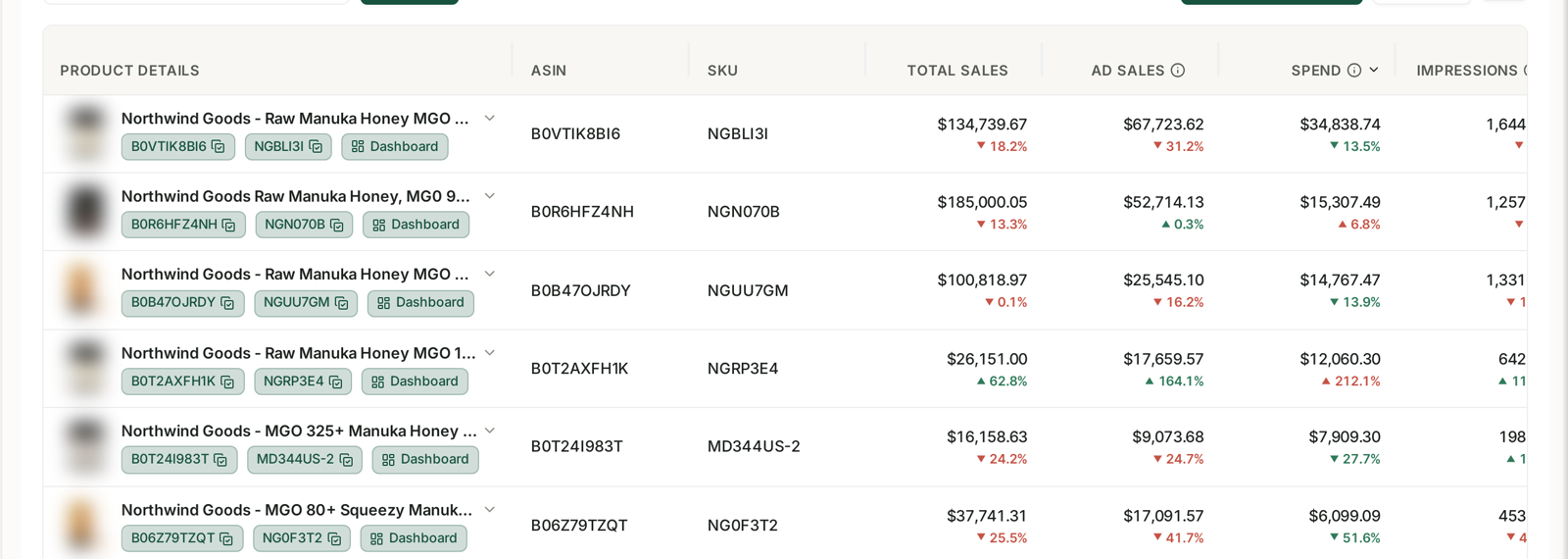
Whether this is worth doing at all is a per-product question, and the input is what each product's rating is actually costing you — see Find the Variation Dragging Your Rating Down.
Where this sits in the wider work
Removal is a short-term lever, not a fix.
It works because those reviews should not have been there — it does not address reviews that are about your product and are accurate.
So run it alongside the real work:
Short-term recovery — see Short-Term Rating Recovery.
Content that answers the recurring complaints — see Answer the Complaints in Your Content.
Product fixes where the complaint is genuine — see Fix the Product by Studying Competitors.
Removing ten off-topic reviews from a product with a genuine defect buys you a few weeks. The defect keeps producing new ones.
Common mistakes
Reporting reviews that are genuinely about the product because they are negative. That is not what the guidelines cover, and it wastes the cases you need.
Giving up after one case. Persistence is the mechanism.
Engaging a service without a scope, and paying to remove three-star reviews on a low-margin product.
Not watching the bill.
Treating removal as the fix, and never addressing why the reviews exist.
Related
- Why a Rating Drop Costs More Than It Looks — what makes this worth paying for.
- Short-Term Rating Recovery — the other fast levers.
- Answer the Complaints in Your Content — the durable fix.