

Packaging is one of the most underrated conversion levers on Amazon, and it is the only one that works in five places at once.
Higher CTR, because a listing with professional packaging stands out in search results.
Higher conversion, because premium-looking products are trusted more.
Better reviews, because a clean unboxing experience prompts them.
Fewer returns, because good design communicates quality accurately and sets correct expectations — see Reducing Your Return Rate.
Stronger brand recall, which drives repeat purchase.
Prefer to watch? One hundred and eighty-eight seconds on what belongs in a packaging brief, testing the design on live Amazon traffic, and updating the listing so the change actually reaches shoppers.
Write the brief before you commission anything
Nearly every disappointing packaging project is a brief problem, not a designer problem.
Include all of this:
Product overview — what it is and why it is different.
Target audience — demographics, lifestyle, preferences. Pull this from Brand Analytics → Consumer Behavior Analytics → Demographics rather than assuming.
Competitor references — screenshots, annotated with what you like and what you do not.
Visual style — modern, clean, playful, earthy, clinical. Pick a direction and commit to it.
Required elements, and be exhaustive:
Logo.
Barcode placement.
Icons — recyclable, country of origin, certifications.
Supplement or nutrition facts, if applicable.
Product dimensions.
Include around five reference designs, not twenty. A wide reference set produces averaged, characterless work.
Giving feedback that produces a better draft
Be specific and actionable.
Not: "make it pop."
Instead: "use a bolder serif for the product name", or "move the icons closer to the bottom edge".
Rank the concepts, and eliminate the off-brief ones early so the effort concentrates where it is useful.
Then shortlist three to five, iterate, and choose.
What to collect at the end
Print-ready dielines — AI and PDF.
PNG and JPEG versions for Amazon use.
Fonts, colour codes, and editable source files.
That last one matters most. Without editable files, every future variation, size and marketplace version means starting again.
Test it before you print thousands
Consumer preference testing will tell you which of two designs people prefer, on a real sample rather than on your own taste.
And Manage Your Experiments lets Brand Registry sellers A/B test on live Amazon traffic — put the new packaging in the main image and run it against the current one.
That second test is the more valuable of the two, because it measures what actually happens to your CTR and conversion rather than what people say they prefer. See Testing a New Main Image.
What is worth testing:
Front panel layout.
Colour scheme.
Icon placement.
Callouts — the specific claims on the front.
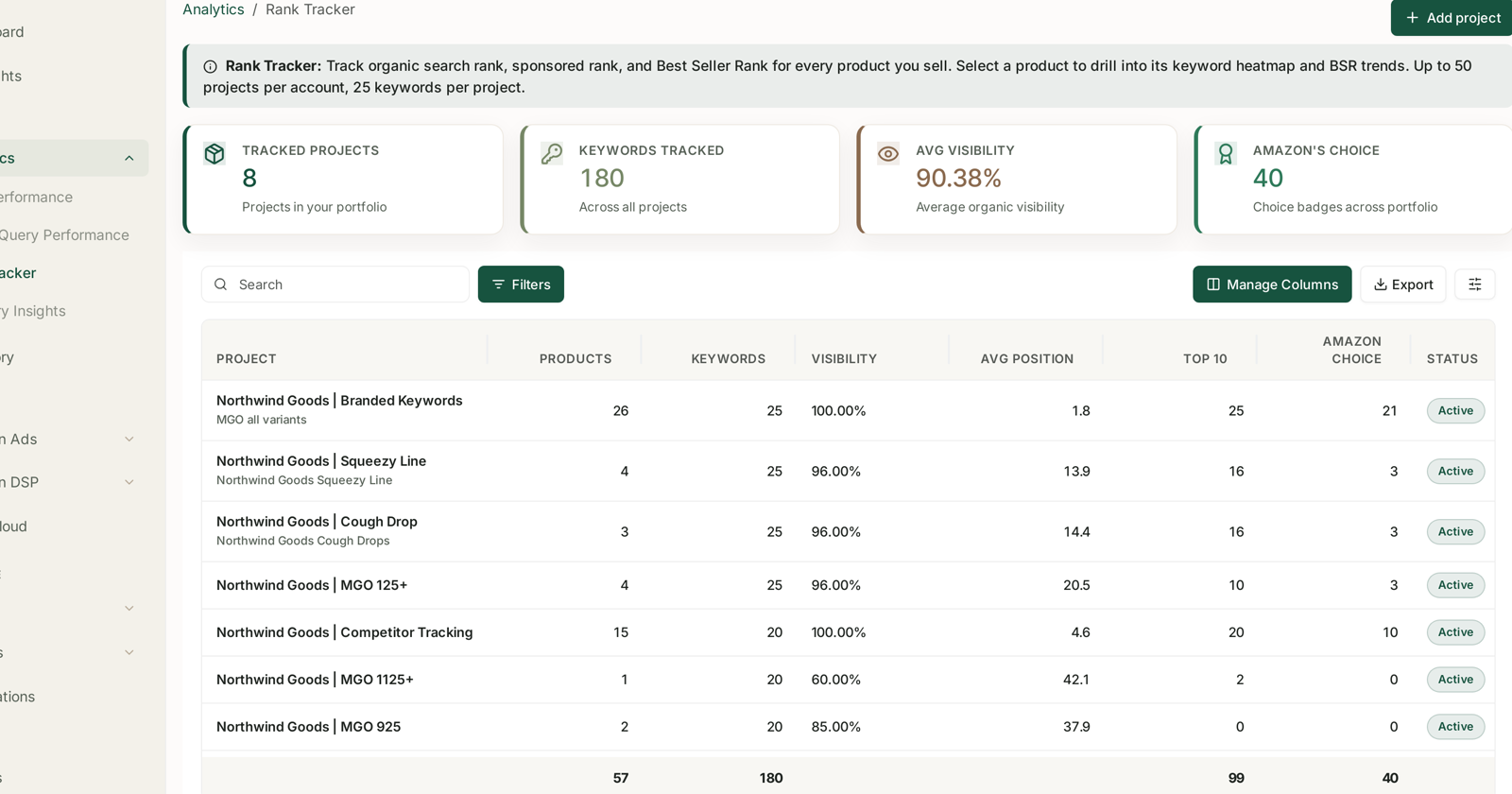
A packaging change shows up as a CTR and conversion movement across your top keywords, and reading that against a baseline is what makes the test conclusive — see Reading Organic and Sponsored Rank.
Align it with the listing, not just the product
Put your primary keyword on the front panel. If you sell organic ashwagandha gummies, those words belong on the box — it is what the shopper is scanning for in the image.
Then carry the same visual language across everything:
Main images.
Storefront header.
Brand Story module.
A+ content.
Packaging that looks different from your listing is a wasted asset. The point is that a shopper recognises the same product across search, listing and delivery.
After you pick a winner
Re-shoot the main image with the new packaging prominent — or build a mockup — see Why the Main Image Decides Your CTR.
Update lifestyle images so the packaging appears in use.
Add insert cards with instructions, warranty information and a route to contact you — which is also how you intercept a return before it happens — see Short-Term Rating Recovery.
Refresh A+ content and the storefront to match.
The packaging is not the deliverable. The updated listing is.
Common mistakes
Commissioning from a thin brief, then blaming the output.
Twenty reference designs, producing something averaged and generic.
Vague feedback, which cannot be acted on.
Not collecting editable source files.
Printing before testing.
Leaving the keyword off the front panel.
New packaging with old listing images, so none of the conversion benefit reaches the shopper.
Related
- Why the Main Image Decides Your CTR — where packaging pays off first.
- Testing a New Main Image — how to prove the change worked.
- Reducing Your Return Rate — the expectations packaging sets.