

The moment a customer decides something is wrong, they are already on the Orders page — one click from a return, and two from a one-star review.
Amazon's product support programme puts a "Get product support" button on that same page, so the customer can reach you before they reach either.
Every conversation you have there is a return you did not fund and a review you did not receive.
Prefer to watch? One hundred and sixty-seven seconds on putting a third option beside Return and Review, which product profiles it pays off on, and turning chat logs into listing fixes.
What it is
Live chat and support, embedded on Amazon's own order page, through a provider partnered with Amazon's product lifecycle support programme.
You need Brand Registry.
And it is a paid service, so the arithmetic below decides whether it makes sense for your catalogue.
What the customer sees
On the Orders page, alongside Return and Review, a Get product support option.
Choosing it lets them visit your support site or start a live chat with you, and in many setups submit a replacement claim instead of a return.
That is the whole mechanism: the same decision point, with a third option on it.
What it lets you do
Fix a misunderstanding. A large share of returns and negative reviews come from a customer who could not work out how something worked, or expected something the product was never meant to do — see Reducing Your Return Rate for the three-way split of return causes.
Send a replacement instead of taking a return. Cheaper for you, better for the customer, and it does not carry the return's rank and rating cost.
Automate the common cases. Chatbots and canned flows handle the recurring questions — missing part, wrong size, setup step — without a person waiting.
And it happens before the return, not after. Which is the entire value: by the time a return is filed, the fee, the fulfilment cost and the sentiment are already spent.
Where the leverage actually is
This is worth most on products with a specific profile:
Anything with setup, assembly or a learning curve.
Anything with sizing or compatibility questions.
Anything where a missing component makes the whole unit useless — a screw, a cable, an adapter.
High-value products, where the cost of one avoided return is large.
It is worth least on simple products that either work or do not, where there is nothing to explain.
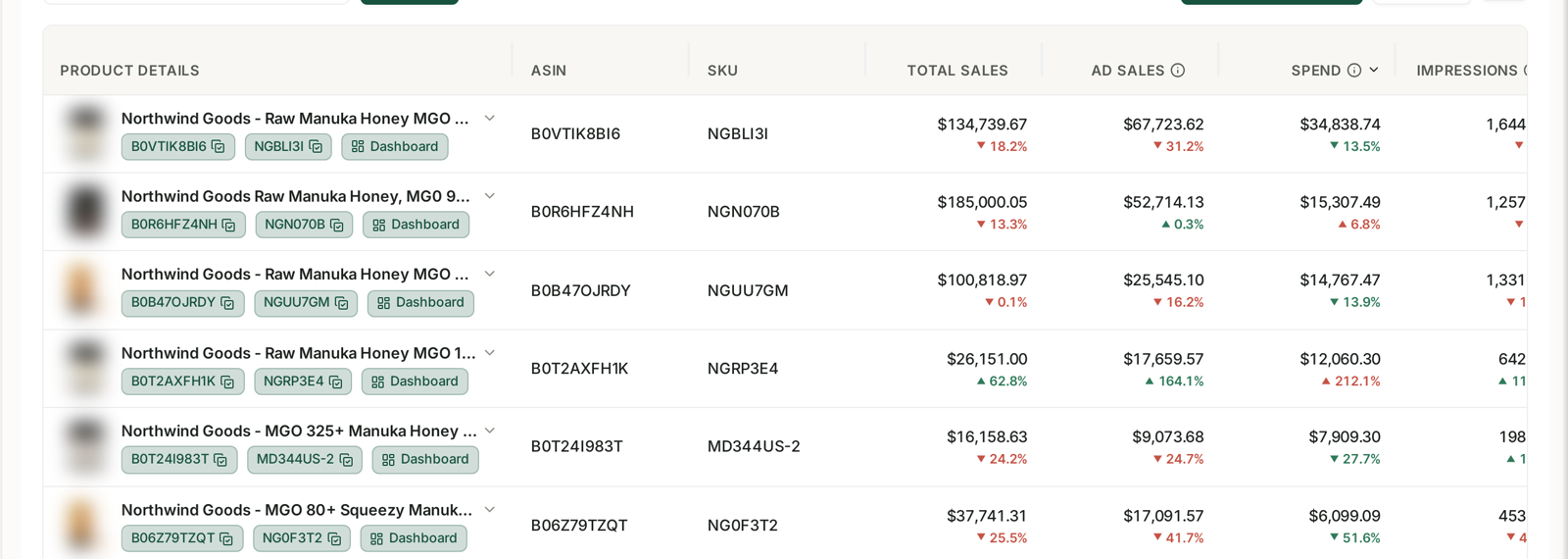
Deciding whether this pays means knowing your return rate and rating per product, not across the account — see Understanding Business Reports. One product with a confusing setup step can be carrying the whole account's return rate.
Doing the arithmetic
Take your worst product on returns.
Estimate what a return costs you — the refund, the original fulfilment fee, the returns processing fee where you are over the category threshold, and the rank and rating damage.
Then estimate what share of those returns are confusion rather than defect. Reading the return reasons and the negative reviews tells you.
If a meaningful share are confusion, this pays. If nearly all are genuine defects, it does not — fix the product instead, see Fix the Product by Studying Competitors.
It is not a substitute for the listing work
Every question a customer asks through support is a question your listing failed to answer.
So treat the chat log as research. The recurring questions belong in your images, your A+ content and a bullet — see Answer the Complaints in Your Content.
Support intercepts the individual customer. The listing intercepts all of them.
Run both: support for the ones already in trouble, listing changes so fewer arrive there.
Common mistakes
Enabling it and not staffing it. An unanswered chat is worse than no chat option.
Using it on simple products where there is nothing to explain, and paying for nothing.
Never reading the chat logs, and missing the clearest list of listing problems you will ever get.
Treating it as a return-prevention tool only. The review it prevents is often worth more than the return.
Skipping the arithmetic, and paying a monthly fee against a return problem that turns out to be defects.
Related
- Reducing Your Return Rate — the three causes, and which one this addresses.
- Short-Term Rating Recovery — the other ways to intercept a bad review.
- Answer the Complaints in Your Content — turning support conversations into listing fixes.