

Returns have always cost you the refund and the fee. Since 2025 they can cost you a third time: Amazon charges a returns processing fee on FBA products whose return rate exceeds their category average.
Which means a return rate you have tolerated for years may now be a line item.
Prefer to watch? One hundred and thirty-six seconds on how the returns processing fee is calculated and billed, and the three causes of returns that each need a different fix.
How the fee works
Each category has its own return-rate threshold, typically between 5% and 12%:
| Category | Threshold |
|---|---|
| Toys | 4.7% |
| Beauty | 5.5% |
| Home & Kitchen | 8.1% |
| Electronics | 11.2% |
Apparel and shoes are excluded, since high return rates are normal there.
You are charged only on the returns above the threshold. Ship 1,000 units with a 10% category threshold and have 120 returned, and you pay on 20 units — not 120.
The timing is delayed enough to be easy to miss. Amazon tracks returns from each month's shipments across the following two months, then charges between the 7th and 15th of the third month. The bill arrives roughly a quarter after the behaviour that caused it, which is why sellers often do not connect the two.
What it costs per unit
Driven by size tier and weight:
| Size tier | Fee per returned unit |
|---|---|
| Small standard | $1.75–$2.10 |
| Large standard | $2.70–$4.60 |
| Bulky | $6.74 + $0.32/lb |
| Extra-large | $26–$157+ |
A large-standard 12 oz item works out around $3.39 per returned unit over the threshold.
On a bulky or extra-large product the numbers get serious quickly, which is where this deserves the most attention.
Find out where you actually stand
Compare your return rate per ASIN against your category threshold. Not your account average — the fee is assessed per product, and one bad ASIN can be paying while the rest are fine.
Then work out what a point of return rate is worth. Units shipped, multiplied by the percentage above threshold, multiplied by the per-unit fee. That number tells you how much effort the fix justifies.
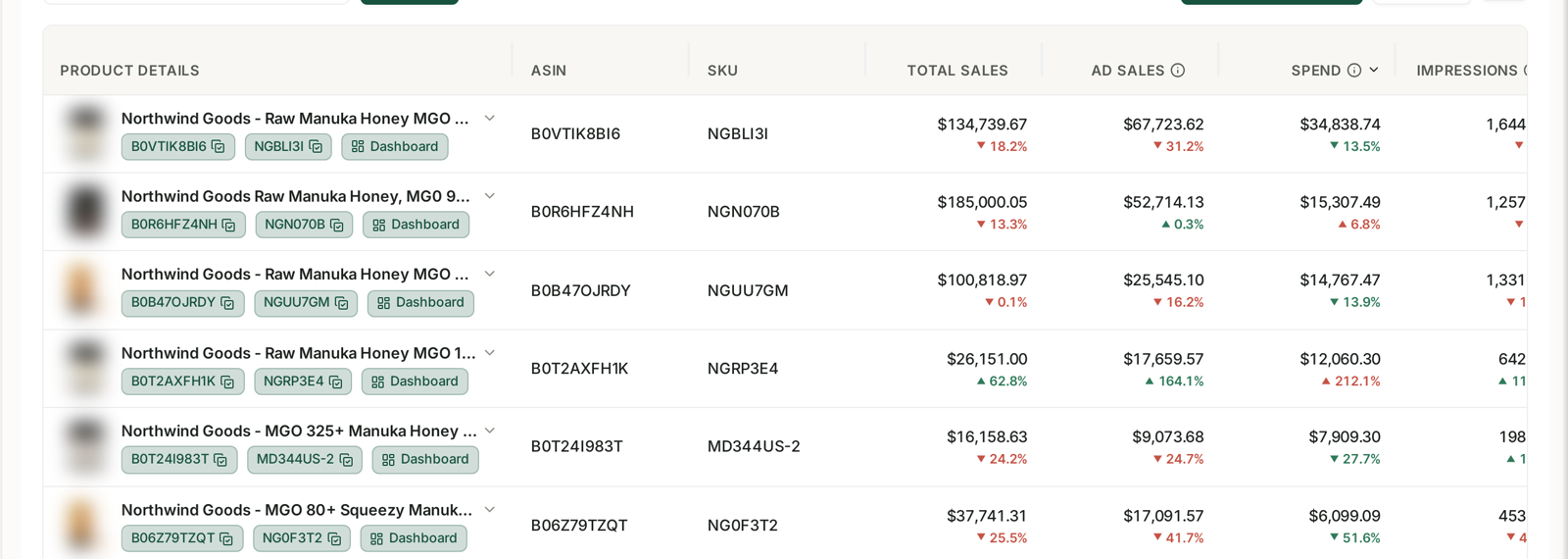
See Understanding Business Reports.
Then fix the cause, not the number
Returns come from three places, and they need completely different responses.
Wrong expectations — usually the largest
The product arrived as designed, but not as the customer imagined. Size, colour, material, compatibility, quantity.
This is a listing problem and it is the cheapest to fix. The same work as Answer the Complaints in Your Content: read the return reasons and the negative reviews, find the recurring theme, and answer it in the images, the A+ content, a bullet and the video.
Being specific reduces returns more than being persuasive. "14cm tall, about the height of a standard mug" prevents a return that "generously sized" causes.
Customer confusion
The product is right and the customer could not work it out. Assembly, setup, first use, compatibility.
Fix it with instructions and an insert card, and give people a way to reach you before they reach the returns button — see Short-Term Rating Recovery.
Genuine defects
The product failed. No listing change fixes this — see Fix the Product by Studying Competitors.
Why this is worth more than the fee
The fee is the smallest part of what a high return rate costs you.
Returns suppress rank, because a returned sale is a negative signal.
They damage your rating, since unhappy returners frequently leave reviews — see Why a Rating Drop Costs More Than It Looks.
They cost the refund and the original fulfilment fee regardless of the new charge.
So the returns fee is best understood as Amazon charging you for a problem that was already expensive. Fixing it recovers the fee, the margin, the rank and the rating together.
Watch the right signal
Return rate responds faster than reviews do. A listing change shows up in returns within weeks, while the review average takes months to move.
So use returns as your early read on whether an expectation fix worked, then confirm with reviews later.
Common mistakes
Reading account-level return rate when the fee is charged per ASIN.
Not knowing your category threshold, so you cannot tell whether you are over it.
Treating an expectation problem as a quality problem, and re-engineering something that was never broken.
Ignoring bulky and extra-large products, where per-unit fees are dramatically higher.
Waiting for the fee to appear — it arrives a quarter late, so by the time you see it you have been paying for months.
Related
- Answer the Complaints in Your Content — fixing expectation-driven returns.
- Where Your Margin Actually Goes — returns as one of the five margin levers.
- Reducing FBA and Referral Fees — the other fees driven by size tier.