

Every Amazon DSP screen in TrackIQ — Campaigns, Ad Groups, Creatives, Audience, Products, Technology, Geography and Inventory — carries the same column set. Several of those columns exist nowhere else in the product, because DSP is measured differently from Sponsored Ads.
Prefer to watch? Fifty-eight seconds on the columns unique to display.
The familiar columns
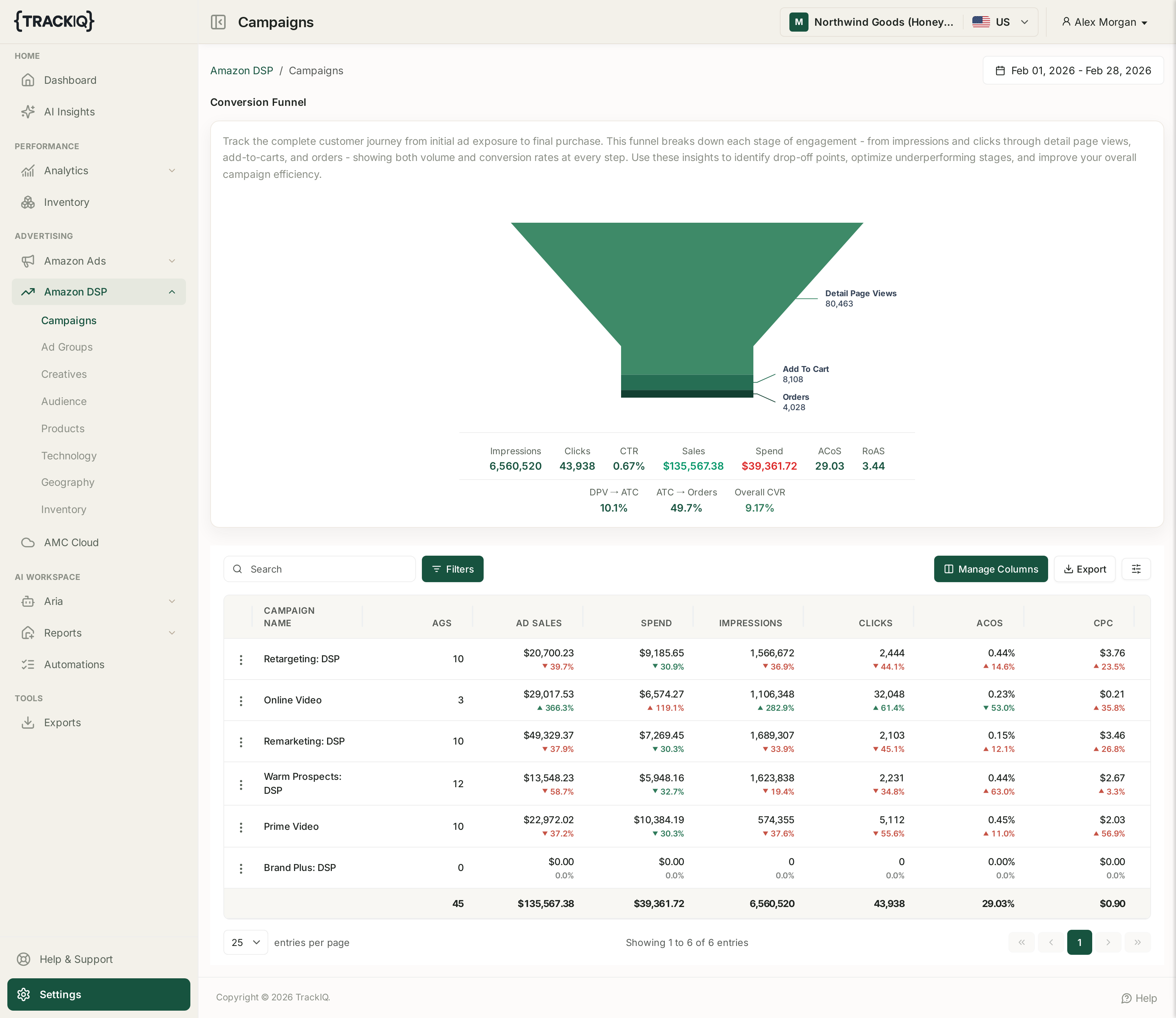
Ad Sales, Spend, Impressions, Clicks, ACoS, ROAS, CTR, CPC and Orders mean exactly what they mean on the Sponsored Ads screens.
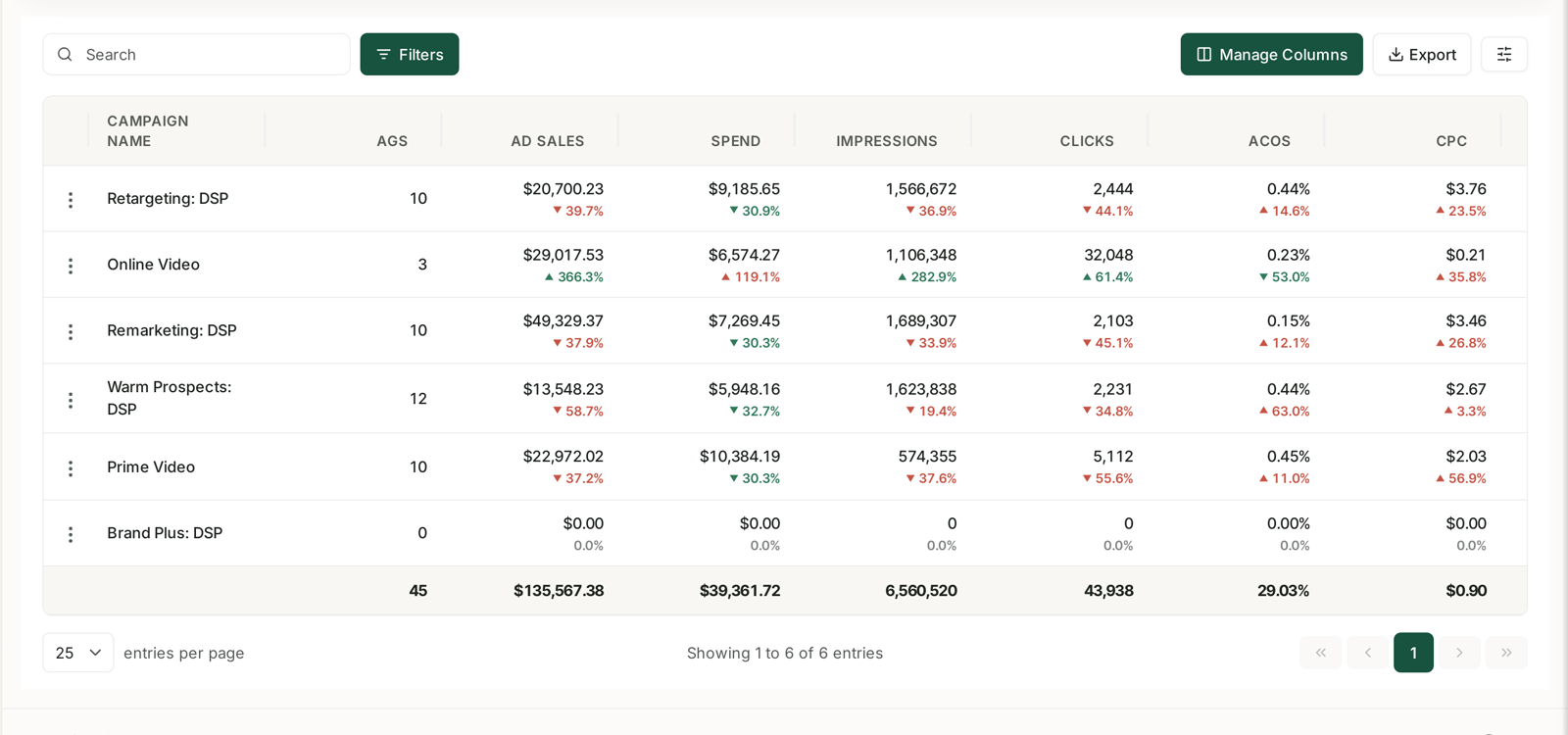
The DSP-only columns
| Column | What it counts |
|---|---|
| DPV | Detail page views driven by the ad — people who went and looked at the product. |
| Add to Cart | Cart additions driven by the ad. |
| NTB Purchase Clicks | Clicks that ended in a purchase by a shopper new to your brand. |
| NTB Purchases | Purchases by shoppers new to your brand. |
| CPA | Cost per acquisition. |
| CVR | Conversion rate. The Sponsored Ads screens call the same metric CR. |
Why DSP should not be judged on ROAS alone
Sponsored Products meets demand that already exists: someone searches, you appear, they buy. DSP mostly does the opposite — it puts your product in front of people who were not looking for it.
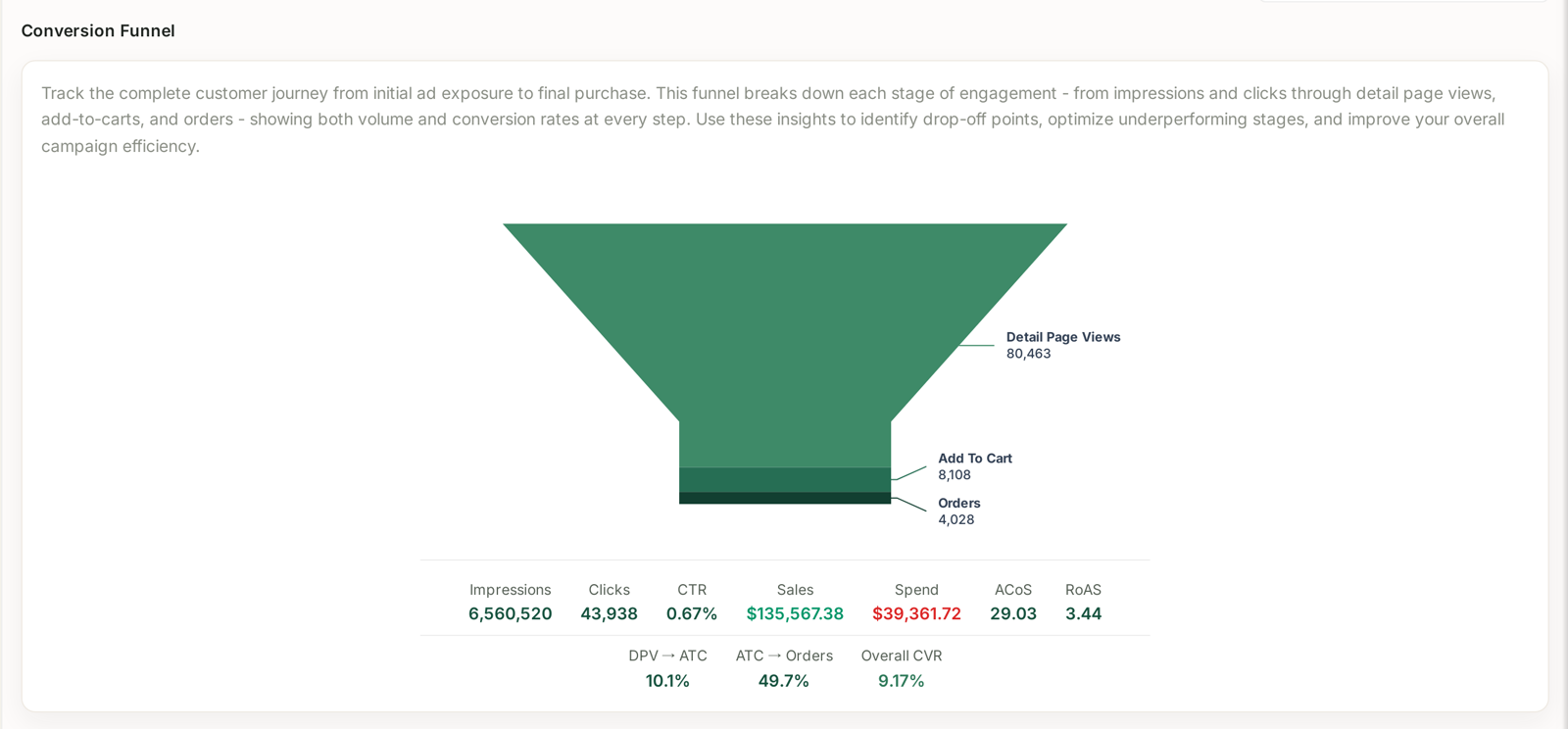
That changes what good looks like. A DSP campaign that generates a large number of detail page views and cart adds is working, even when the ROAS on the same row looks poor against a Sponsored Products campaign. The purchase often happens later, through a different route, and gets credited elsewhere.
So read the funnel across, not just the last column:
- Impressions → did it reach people?
- DPV → did enough of them care to look?
- Add to Cart → did the listing convince them?
- NTB Purchases → did it bring in people you did not already have?
A campaign that drops off sharply between DPV and Add to Cart has a listing problem, not a targeting problem. One that reaches plenty of people but generates few detail page views has the reverse.
NTB is the number that justifies the channel
If DSP is doing the job it exists for, its NTB Purchases should be a high proportion of its purchases — higher than your Sponsored Products campaigns manage. That is the case for running it: it buys customers rather than orders.
To see that comparison properly, the AMC Cloud dashboards break new-to-brand performance down across every channel at once.
The eight DSP screens
Each one applies the same columns to a different dimension:
| Screen | Groups performance by |
|---|---|
| Campaigns | campaign |
| Ad Groups | ad group |
| Creatives | individual creative |
| Audience | audience segment |
| Products | product |
| Technology | device |
| Geography | location |
| Inventory | where the ad ran |
Related
- Analyzing Your DSP Performance — the screen these appear on.
- What 'New to Brand' Actually Means — NTB, which DSP counts its own way.
- Glossary: ACoS, TACoS, ROAS, NTB and Every Other Column — every other column.