

Offers appearing under Other Sellers on Amazon on your own listing mean one of three things — and they need completely different responses.
Diagnose before you act. Sending a cease-and-desist to Amazon Warehouse achieves nothing except wasting the week you needed.
Prefer to watch? One hundred and seventy-one seconds on telling the three cases apart, the four removal methods in order of strength, and verifying removal rather than trusting a closed case.
Three things it could be
1. A hijacker selling counterfeits
Poorly made knock-offs on your listing. They take your sales, attract bad reviews that attach permanently to your ASIN, and damage the brand.
The clearest signal is in your reviews: complaints describing a product that is not the one you sell. Wrong material, wrong size, missing parts, poor build — from buyers who genuinely received something else.
This is the one you attack with everything.
2. A legitimate reseller
Selling your actual product, sourced somewhere real.
Quality is intact, but they take your sales, and winning the Buy Box back usually means cutting price — which costs you margin on every unit, not just theirs.
You cannot report them for counterfeiting, because they are not counterfeiting. Only serialisation keeps them off the listing.
3. Amazon Warehouse
Amazon reselling sellable customer returns, in a condition other than New.
Not a problem to solve. It is a normal consequence of returns — see Reducing Your Return Rate if the volume bothers you.
What it costs while it runs
You lose the Buy Box, so orders placed on your listing go to them.
Negative reviews accumulate on your ASIN from customers who bought a counterfeit — see Why a Rating Drop Costs More Than It Looks.
Brand image and repeat purchase suffer.
And winning the Buy Box back means cutting price, which reduces profit on every unit you sell — not just the ones they took.
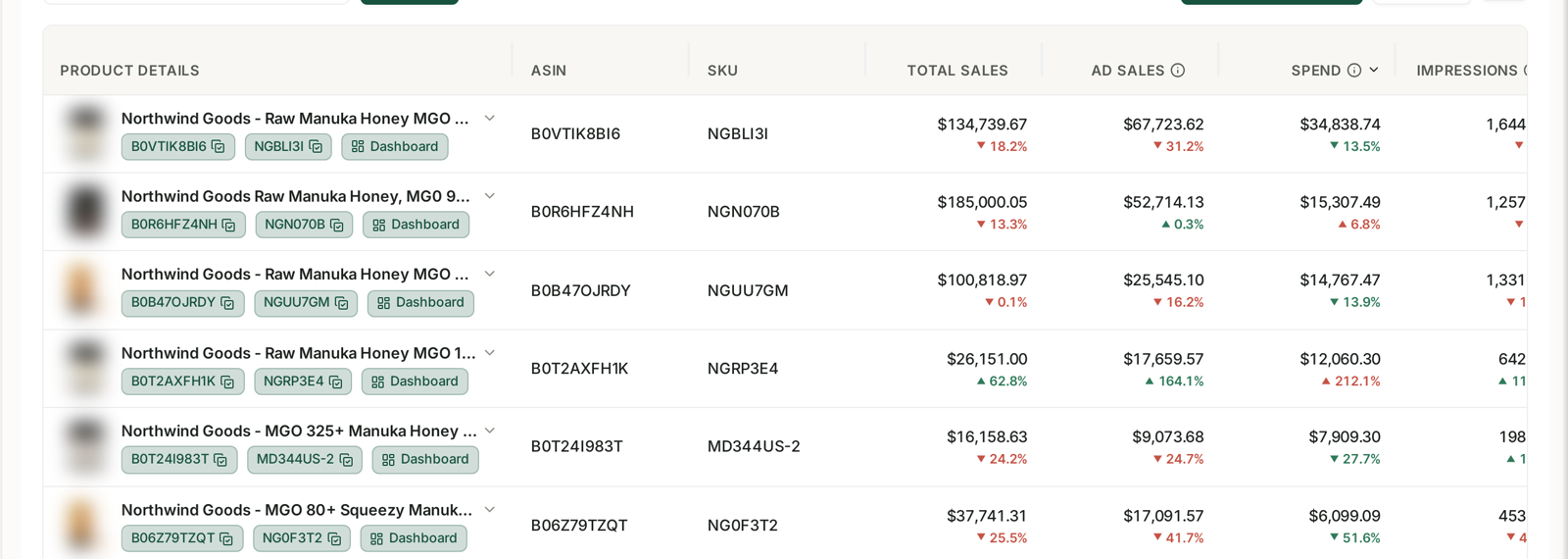
A hijacking shows up first as a Buy Box loss and a rating slide, often before you notice the offer itself — see Find the Variation Dragging Your Rating Down. Noticing it from a monthly review means a month of lost sales and permanent reviews.
The four methods, in order of strength
1. Project Zero — the strongest
Self-service removal. Enrolled brands remove a hijacker from their listing without needing Amazon's approval on each case.
That is the whole difference. Every other method is a request that Amazon may or may not action, at a speed you do not control.
Eligibility requirements are not especially demanding. If you are eligible, enrol — it changes hijacking from a multi-week case into a same-day action.
2. Cease and desist
A message through Seller Central telling them to stop.
It works more often than it should, because the recipient worries about account suspension and frequently just removes the offer.
Free, immediate, and worth sending while slower methods run.
3. Test buy and IP violation report
Buy the unit yourself, so you have evidence of what they are actually shipping.
Then file through Report a Violation in Brand Registry, or the Report Infringement form.
If Amazon confirms infringement, the seller is removed.
The test buy is the part people skip and the part that makes the report credible. A report without evidence is an assertion.
4. Transparency
Product serialisation. Every unit carries a unique code, and a product enrolled in Transparency cannot be listed or shipped on Amazon without a valid code.
This is prevention rather than removal, and it is the only thing that stops legitimate resellers as well as counterfeiters.
Slower to set up, because it changes your packaging and your supplier's process. Worth it on products that are repeatedly targeted.
Which to use
| Situation | Methods |
|---|---|
| Counterfeit hijacker | All four — Project Zero, cease and desist, IP report, Transparency |
| Legitimate reseller | Project Zero, Transparency only |
| Amazon Warehouse | None needed |
Run them in parallel, not in sequence. Send the cease and desist today, file the IP report today, and let Project Zero remove them immediately if you have it.
Verify the removal
Open your product detail page and look below the Buy Box.
If the New & Used offers section shows no other sellers, they are gone.
Check it yourself rather than trusting the case status. A closed case is not the same as a removed offer — see Escalating an Amazon Case.
And re-check periodically. Removed hijackers return, frequently under a new seller name.
Common mistakes
Acting before diagnosing, and treating a reseller or Amazon Warehouse as a counterfeiter.
Filing an IP report without a test buy.
Running the methods one at a time, when they can all run at once.
Cutting price to win the Buy Box back, and leaving it cut after they are gone.
Not enrolling in Project Zero while eligible, and handling every incident as a case.
Checking once. They come back.
Related
- Why a Rating Drop Costs More Than It Looks — the review damage a hijacker leaves behind.
- Escalating an Amazon Case — when the report stalls.
- Short-Term Rating Recovery — repairing the rating afterwards.