

Deal slots are limited within each category, and Amazon offers them to the strongest ASINs first. If those sellers do not book, eligibility rolls down to the next tier.
Which means booking is competitive, and waiting costs you slots you were entitled to.
Prefer to watch? One hundred and twenty-three seconds on why booking early matters, the five checks before every deal, and the promotion-frequency trap that compounds against you.
Book a weekly hour
A recurring one-hour deals review, treated as an operational task rather than something you do when you remember.
Amazon opens booking on a rolling window — typically the next eight weeks. New dates appear continuously, and slots taken by other sellers do not come back.
Book everything that fits your strategy, as soon as it appears. You can cancel up to the day before, so booking early costs nothing and waiting can cost the slot.
Always take the full fortnight
A one-week Best Deal triggers the same cooldown as a two-week one, while delivering far less exposure.
That makes a one-week deal close to a waste of your cooldown period.
If only one week is currently available, wait seven days for the fuller window to open rather than taking the short slot.
Then check every deal before it runs
For any deal starting in the next week or two, five checks.
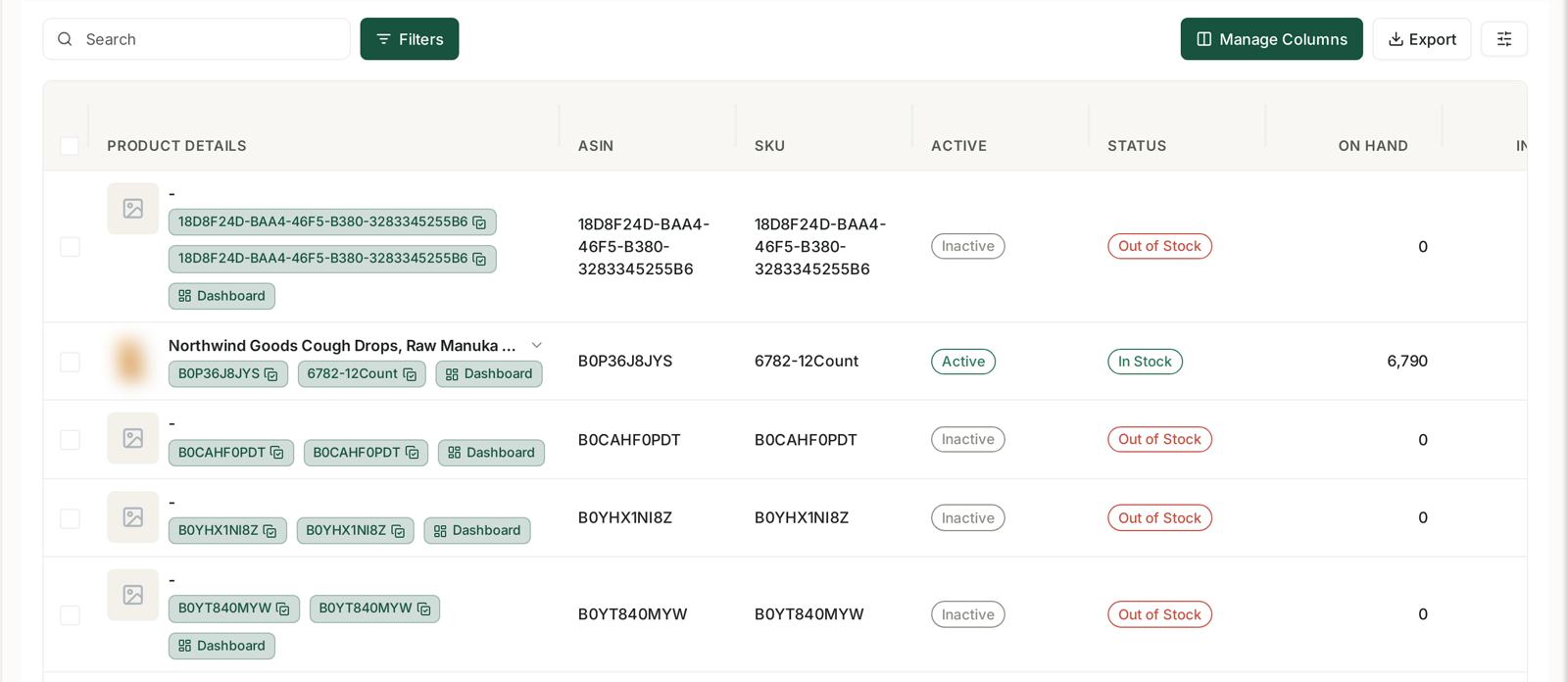
Inventory, at child ASIN level
Confirm you have stock for the deal volume — per child, not per parent.
If your main traffic-driving child might run out, cancel or postpone. A deal that sells you out of your hero variation costs more than it earns.
If only secondary children are short, remove those children and run the deal on the rest.
See Monitoring Inventory Against Sales.
Configuration
Not restricted to Prime customers only. No committed quantity on a Best Deal. Both are easy to set accidentally and both damage the deal.
Pricing
Check for errors, and confirm you are using the highest price still eligible. Discounting further than required is money given away for no additional benefit.
Profitability
Confirm the deal still makes money after the discount, the deal fee and expected returns.
Then plan your advertising budget before it starts — see Managing Advertising During a Deal.
SKU
Confirm the right SKU is enrolled. An obvious check that catches a surprising number of mistakes.
The promotion-frequency trap
This one has caught a lot of sellers out, and it works against you slowly.
If a product is on promotion — Best Deal, Lightning Deal, price discount, any of it — more than 50% of the time across the previous 90 days, Amazon begins requiring your deal price to sit at least 5% below your 90-day median price.
The effect compounds. Promote too often, and your maximum allowable deal price falls, which forces deeper discounts, which lowers your median price, which lowers the ceiling again.
Keep promotions under about 45 days in any 90.
A schedule that stays safely inside it: consecutive two-week Best Deals followed by the mandatory 21-day cooldown, and no Lightning Deals in between. That lands around 40% promotional time.
Check this before booking anything. In the US and Canada, two-week Best Deals plus a few Lightning Deals will exceed 50% easily. In the UK and EU, where the cooldown is only seven days, back-to-back Best Deals can also push past it.
If a product is at or near the threshold, postpone. Skipping one promotion protects the price ceiling for every future one.
The weekly review, in order
1. Check the last 90 days and confirm promotional time is under 50% for each product.
2. Book newly available slots, maximum duration, everything that fits.
3. Put booked deals on the team calendar, so inventory, pricing and advertising can be planned around them.
4. Run the five pre-deal checks on anything starting in the next fortnight.
5. Postpone anything that fails a check.
Why the calendar matters more than any single deal
A deal in isolation is a good day. A calendar is a strategy.
Booked in advance, deals let you plan stock, price and advertising around known dates rather than reacting. That is the difference between a deal that produces your best fortnight and one that sells you out of your hero product at a discount you did not need to give.
And consistency compounds competitively. Recurring deals hold pressure on competitors, keep your conversion and rank elevated, and reinforce the position that got you eligibility in the first place.
Common mistakes
Booking late and losing slots to sellers who booked early.
Taking one-week Best Deals and burning the same cooldown.
Skipping the inventory check, then selling out mid-deal.
Committed quantity or Prime-only on a Best Deal.
Discounting deeper than required, because the maximum eligible price was never checked.
Ignoring the 50% rule until the deal price ceiling has already fallen.
Related
- Amazon Deals: Lightning and Best Deals — the two types and eligibility.
- Maximise Your Deal Price — protecting the ceiling this depends on.
- Inventory Forecasting and Purchase Orders — stocking for booked dates.