

A rating falling from 4.3 to 4.2 is not a cosmetic problem. It starts a negative flywheel: conversion and click-through fall, sales fall, TACOS rises, organic rank slips, and each of those makes the next one worse.
So the sequencing matters as much as the tactics. This is the order to run them in, and how hard to run them.
Prefer to watch? One hundred and sixty-six seconds on the two things to do on day one, sequencing content against the competitor teardown, and sizing the effort to what the drop is costing.
Day 1, before anything else: remove low-rated child ASINs
This is the only action that can restore your rating the same day.
Removing one to three badly rated child variations from a parent routinely takes a listing straight back from 4.2 to 4.3 — and that buys you the weeks or months you need to fix the actual problem.
Check every marketplace, not just your main one.
If the listing has a single child, there is nothing to do here. With five, ten or fifty children, this is the first thing to look at — see Find the Variation Dragging Your Rating Down.
And be clear about what it is: relief, not a fix. The underlying cause is still producing reviews.
Day 1, second: order your competitors
Order the top three well-rated competitors and have them shipped to your supplier.
Do this on day one, because it takes one to two weeks to arrive and the clock starts when you order, not when you get to it.
Order a set to yourself as well if you want to examine them directly — useful, not essential.
This is the long-term fix in motion while you work on everything else — see Fix the Product by Studying Competitors.
The next two weeks: content
While the competitor units are in transit, analyse your negative reviews and find the top one to three recurring problems.
Then answer them in the listing. An image for the biggest problem, an A+ section, a bullet, and the video where relevant.
This takes real time — a good image or A+ section is not an afternoon — which is exactly why it fits the shipping window.
Then implement it live — see Answer the Complaints in Your Content.
And create insert cards addressing the same problems, before your next purchase order — because they have to be manufactured with the units.
The next PO
By the time you place it, three things should be true:
The product quality issue is understood, from the competitor teardown.
The improved content is live.
The insert cards are designed and ready to include.
That PO is where the fix actually lands. Everything before it is holding the line.
Short-term levers, in priority order
Run these alongside the long-term work:
1. Review-removal tooling for guideline violations — simplest to implement, real impact.
2. A removal service for off-topic negative reviews — costs money rather than time, which makes it easy to run in parallel — see Removing Reviews That Break the Rules.
3. Vine — slower, and worth it when the product genuinely matters — see Vine: Reviews for a New Product.
4. Product support on the order page — for large products only, given the cost — see Intercepting a Return With Product Support.
The order is by effort-to-impact, so you are always doing the cheapest useful thing next.
How hard to push depends entirely on the product
This is the judgement call, and it is arithmetic.
If this is your leading product, run everything, and make it the first thing you do each day — one to three hours — until the rating recovers.
A product doing $5m a year that drops to 4.2 and loses 30% of its sales has cost you $1.5m. That justifies near-total attention.
A product doing $500k inside a $5m brand is worth fixing, but not at that intensity. Run the long-term work, plus child-ASIN removal, plus the cheap review-removal levers, and let it take longer.
If sales have fallen dramatically, move faster and use everything. If they have barely moved, you have time.
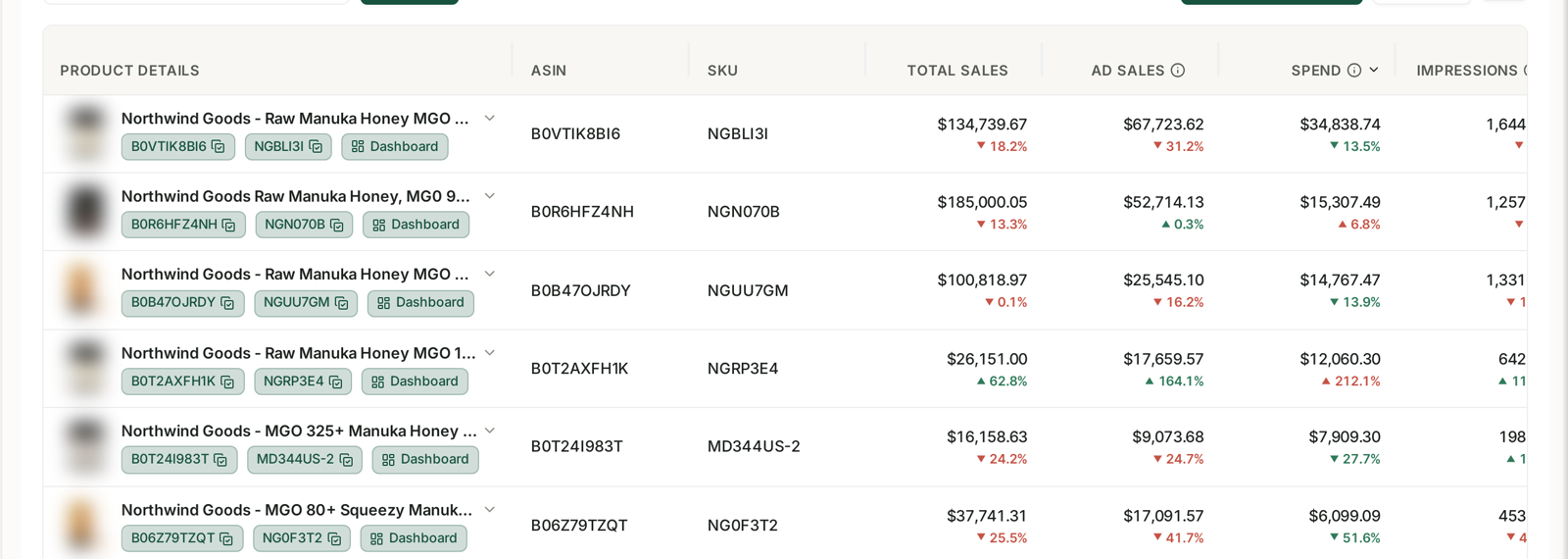
The whole prioritisation depends on knowing what this specific product's rating drop is costing in sales, not on how the rating looks — see Why a Rating Drop Costs More Than It Looks.
The goal
Get back to 4.3.
Not 4.5, not perfect — back over the threshold you fell below, because that is where the flywheel reverses.
Common mistakes
Starting with the long-term work and skipping the same-day child-ASIN check.
Ordering competitor products late, so the teardown lands after the next PO.
Treating child-ASIN removal as the fix, and stopping there.
Designing insert cards after the PO is placed.
Running every lever on a product that does not justify it, or too few on one that does.
Not prioritising at all on a leading product, and letting the flywheel run for a quarter.
Related
- Why a Rating Drop Costs More Than It Looks — why this is urgent.
- Find the Variation Dragging Your Rating Down — the same-day action.
- Short-Term Rating Recovery — the fast levers in detail.