

You have scored your advertising across eight reports, one to ten each — a maximum of 80. See Score Your PPC Performance.
Above 50 is a good sign. Below 50 is a bad one.
What you do next depends on that score and on who currently runs your advertising. Four paths, and picking the wrong one wastes months.
Prefer to watch? One hundred and fifty-nine seconds on patching gaps versus rebuilding, the three options when an agency underperforms, and baselining so the next review is not another guess.
If you run advertising in-house
Score 7+ per report — good performance
Add only the specific processes that scored badly.
If two of eight reports scored low, add those two. Your existing system is producing good results, so a wholesale replacement risks more than it gains.
This is a small lift with a clear return — you are patching identified gaps rather than rebuilding.
Score 6 or lower — poor performance
Implement the full system.
All the reports, on their cadences, with the weekly, fortnightly and monthly rhythm — see The Nine-Report PPC Routine and The PPC Management Workflow.
Because a low score across several reports usually means several critical processes are missing entirely, and adding one at a time to a structurally incomplete system does not compound.
If an agency runs your advertising
Score 7+ — good performance
Same answer: add only the low-scoring processes.
Your agency is doing well. Ask them to add the specific missing reports, and give them the criteria rather than a complaint.
Score 6 or lower — poor performance
Three options, and there is no single right answer. It depends on your size, product count, capability and available time.
Option 1: bring it in-house.
Right if you want to build the skill and can commit roughly seven hours a week.
It is the strongest long-term position — see In-House PPC or an Agency — and it is the option most people underestimate the time cost of.
Option 2: switch agencies.
Gather free audits and quotes from several, compare them, and pick the best fit.
The audits are useful on their own, because several independent reads of your account will agree on the real problems.
Option 3: keep the agency and have them add the missing processes.
Honestly the weakest of the three, and worth knowing why before you choose it.
A low score usually means many critical processes are missing entirely, which is a large amount of new work for an agency operating a standardised system. In practice this works sometimes and fails often — not through bad faith, but because the volume of additional process is beyond what the engagement was priced for.
Choose it when the relationship is genuinely good and you would rather fix than replace — with clear expectations about how much you are asking for.
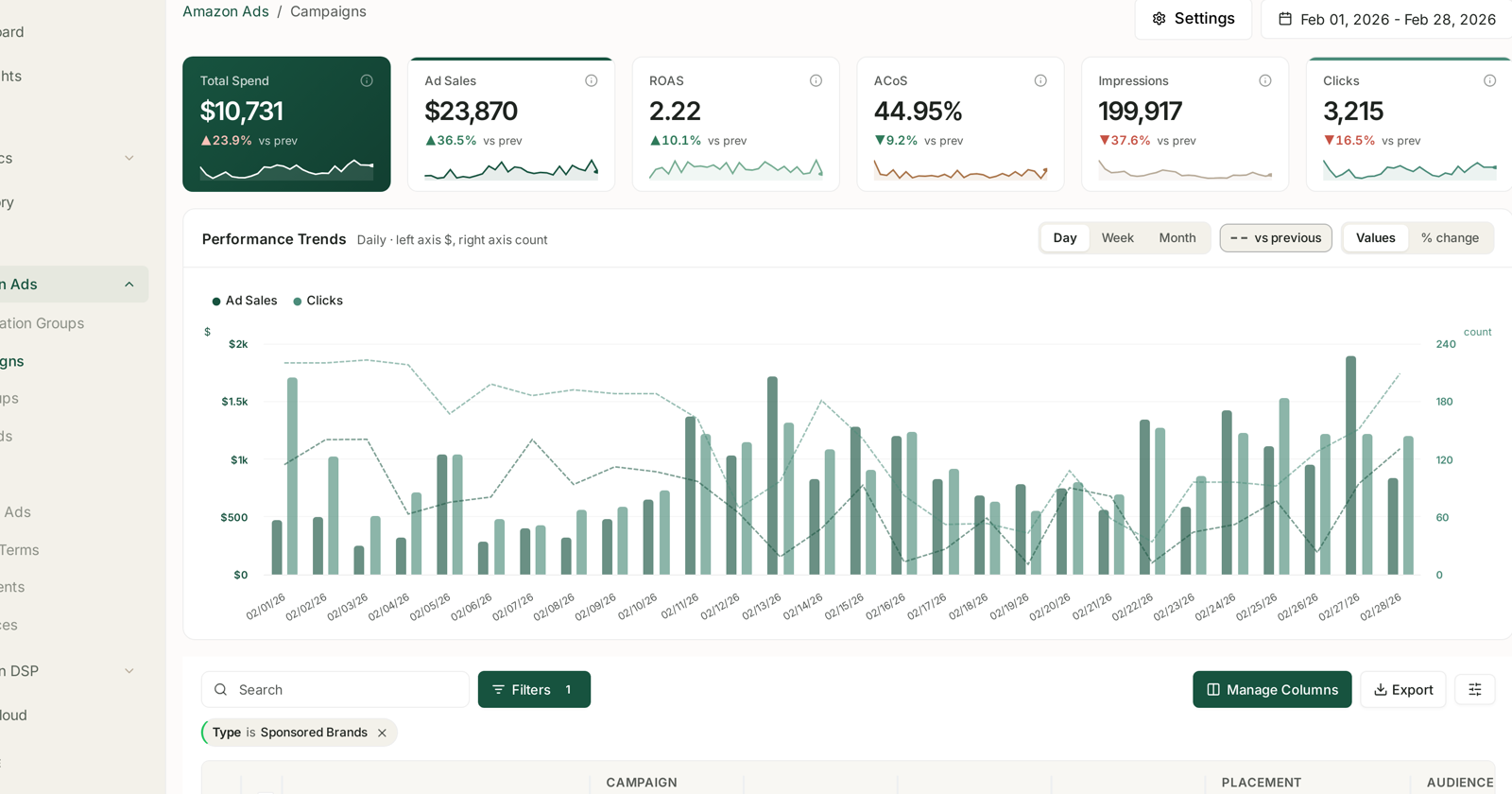
Whichever path you take, re-score at the same eight reports in a few months — see Campaigns: Budgets, Placement and Audience Adjustments. Without a repeatable score you cannot tell whether the change worked, and every one of these paths is expensive to get wrong twice.
The decision in one table
| In-house | Agency | |
|---|---|---|
| Score 7+ | add the low-scoring processes | ask the agency to add them |
| Score ≤6 | implement the full system | in-house, switch agency, or add processes |
Whatever you choose, baseline first
Record the score before you change anything.
Then re-score after a defined period. That is the only way to know whether the decision was right, and it costs one afternoon.
Common mistakes
Rebuilding everything on a good score, and breaking a system that worked.
Adding one process at a time to a score of 4, where the gaps are structural.
Bringing it in-house without the seven hours a week, and doing it worse than the agency did.
Skipping the free audits when considering a switch.
Keeping a failing agency and asking them to absorb a system's worth of new process.
Not baselining, so the next review is another guess.
Related
- Score Your PPC Performance — producing the score this decision runs on.
- In-House PPC or an Agency — the fuller case on both sides.
- The PPC Management Workflow — what implementing the full system involves.